RBI Allows Differential Bulk Deposit Rates Based on Liquidity Risk: What It Means for Banks and Investors
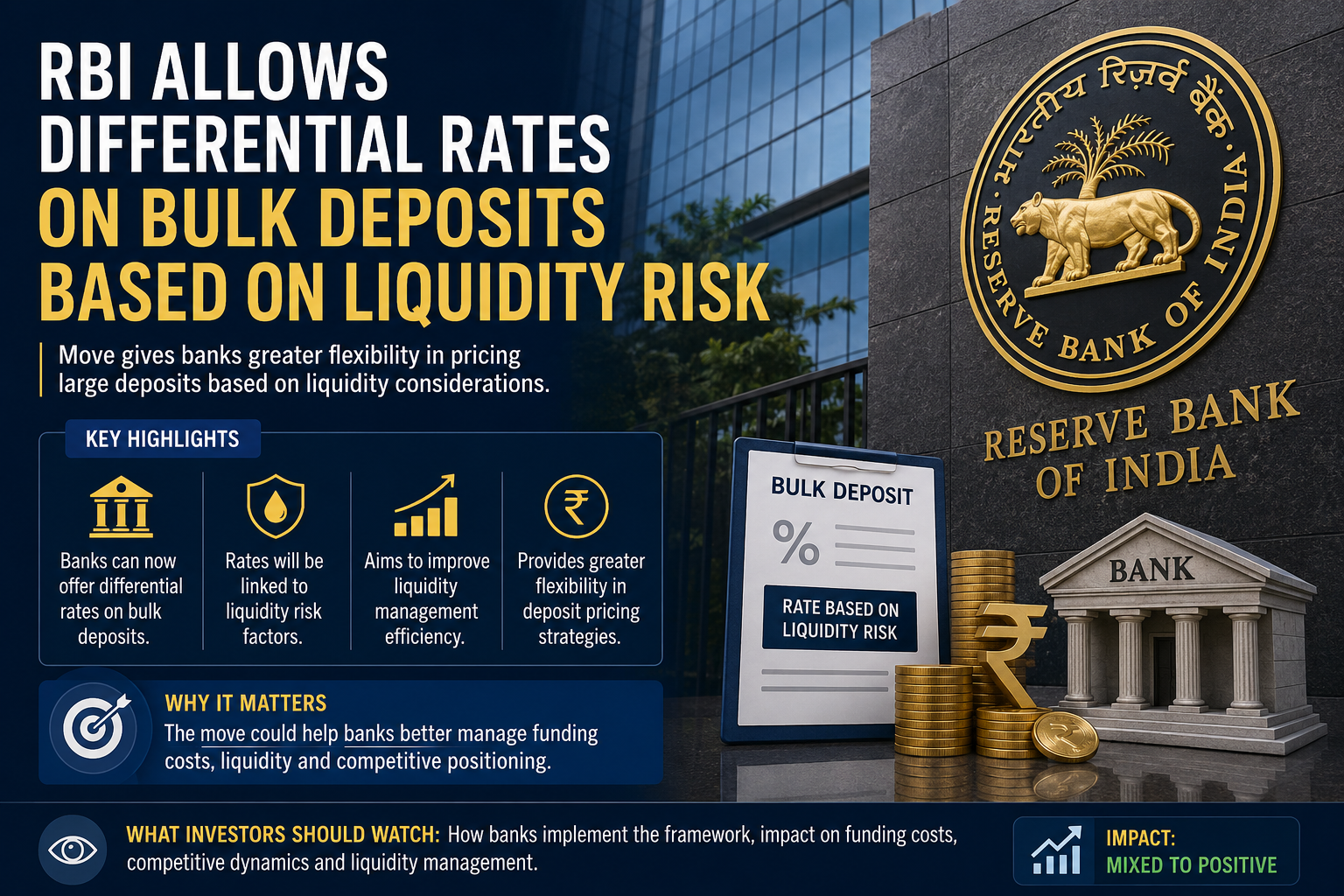
RBI Introduces Greater Flexibility in Bulk Deposit Pricing
The Reserve Bank of India has allowed banks to offer differential interest rates on bulk deposits based on liquidity risk, marking an important regulatory change for the country's banking sector. The move gives lenders greater flexibility in pricing large deposits according to their liquidity profile instead of adopting a uniform approach.
Although the announcement does not require banks to immediately revise deposit rates, it provides them with an additional tool to manage liabilities more efficiently. The policy is expected to strengthen banks' ability to align funding costs with their liquidity requirements while supporting better balance sheet management.
What Are Bulk Deposits?
Bulk deposits refer to large-value deposits accepted by banks, typically from corporate entities, institutions or high-value customers. These deposits often play a significant role in a bank's funding mix and can influence liquidity management because they may behave differently from retail deposits.
Since such deposits can vary in stability and withdrawal patterns, allowing banks to price them differently based on liquidity risk provides greater operational flexibility.
Why the RBI's Decision Matters
Liquidity management is one of the most critical responsibilities for every commercial bank. Maintaining sufficient liquidity helps banks meet customer obligations while supporting lending activities and regulatory compliance.
With the new framework, banks can evaluate the liquidity characteristics of bulk deposits and determine interest rates accordingly. This enables institutions to adopt more efficient funding strategies instead of relying on a one-size-fits-all pricing model.
Impact on the Banking Sector
The RBI's decision is expected to be closely watched by both public and private sector banks. Institutions with different funding profiles may adopt different pricing strategies depending on their liquidity position and business objectives.
Some banks may choose to offer more competitive rates to attract specific categories of deposits, while others may focus on optimising funding costs. As a result, the implementation of the policy is likely to vary across individual lenders.
What It Means for Investors
For equity investors, the announcement is primarily a structural regulatory development rather than an immediate earnings catalyst. The new flexibility could improve funding efficiency over time, but the actual financial impact will depend on how each bank incorporates the revised framework into its liability management strategy.
Investors may increasingly compare banks based on their funding mix, liquidity management practices and execution rather than expecting a uniform sector-wide outcome.
Potential Market Impact
Banking stocks remain an important component of benchmark indices such as the Nifty 50 and Sensex. Any regulatory measure that influences funding strategies naturally attracts investor attention. While this announcement does not guarantee changes in profitability or lending activity, it enhances operational flexibility for banks, which could be viewed positively by the market over the longer term.
At the same time, investors are likely to wait for management commentary and future financial disclosures before assessing the practical benefits of the revised framework.
Key Factors to Watch
- How major public and private sector banks revise their bulk deposit pricing strategies.
- Whether the policy leads to changes in funding costs and liquidity management.
- Management commentary during upcoming quarterly earnings announcements.
- Any impact on competition for large institutional deposits.
- Future regulatory guidance related to banking liquidity management.
Conclusion
The RBI's decision to allow differential interest rates on bulk deposits based on liquidity risk represents an important step toward giving banks greater flexibility in liability management. While the policy does not automatically change deposit rates or financial performance, it equips lenders with an additional mechanism to optimise funding strategies according to their liquidity needs.
For investors, the development is a reminder that regulatory changes can gradually reshape banking sector dynamics. The long-term impact will depend on how individual banks implement the framework and whether the additional flexibility translates into more efficient funding and stronger balance sheet management.
Related Articles

Indian Stock Market Today (28 Aug 2026): Persistent Surges, Lenskart Block Deal, TCS and Tata Power in Focus
Indian Stock Market Today (27 Aug 2026): Nifty Breaks Support as Bharti Airtel Falls, Zee Settles Dues